How is cork made? From cork oak to vegan leather goods
You hold in your hands a bag, a pair of shoes, or a piece of jewelry made of natural cork — but do you really know where this material comes from and how it is transformed? From the bark of a centuries-old tree in Portugal to your wardrobe, the journey of cork is a fascinating story of ancestral craftsmanship and respect for nature.
The cork oak: a unique tree in the world
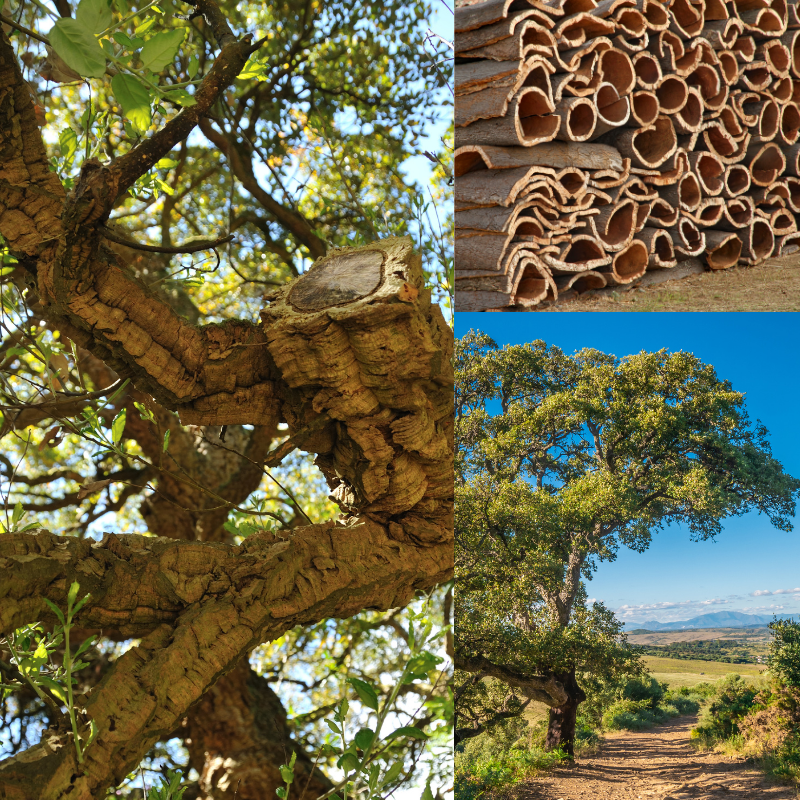
It all begins in the cork oak forests of Portugal — the montados — which alone account for a third of the world's cork production. These ancient forests are among Europe's richest ecosystems, home to hundreds of animal and plant species, some of which are endemic to the Iberian Peninsula.
The cork oak is a tree of exceptional longevity — it can live up to 200 years. But before it can produce cork usable for leather goods, you have to be patient. A cork oak only starts to be profitable after 25 years of growth. It is this patience, this respect for the tree's natural rhythm, that makes cork a truly sustainable material.
Harvesting: an ancestral practice passed down from generation to generation
The harvesting of cork, called debarking or stripping, is an entirely manual operation. No machine can replace it — it requires the precise eye and hand of an experienced artisan to remove the bark without harming the tree.
Harvesting takes place between May and August, during the most active growth phase of the cork oak. This is when the bark naturally detaches more easily from the trunk.
The first cork harvested, called "virgin cork" or desbóia in Portuguese, is quite irregular and rough — it cannot yet be used for leather goods. After this first debarking, the tree needs 9 years to regenerate a new layer of bark. The second debarking, called secundeira, already yields a more regular structure. It is from the third debarking, i.e., after more than 40 years, that the cork reaches the quality necessary for high-end fashion products.
And that's the beauty of this material: the tree is never cut down. Only its bark is removed, which grows back naturally. The same cork oak can be harvested about twenty times during its lifetime.
Transformation: from raw bark to noble material
After harvesting, the cork planks undergo a long transformation process before becoming the vegetable leather you know.
Step 1 — Outdoor resting
The harvested planks are transported and stacked outdoors for a minimum of six months. These stacks are carefully built to maximize air circulation between the planks and prevent any microbial contamination. This natural drying stabilizes the material and improves its properties.
Step 2 — Boiling
The planks are then boiled in hot water for about an hour. This step eliminates impurities and potential parasites, softens the bark, and allows it to flatten evenly. It is after boiling that the cork reveals all its suppleness and softness to the touch.
Step 3 — Sorting and selection
Once boiled and dried, the planks are sorted and classified according to their quality and intended use. First-grade cork — the most regular and dense — is reserved for stopper production. Second and third-grade cork, equally resistant but with variations in texture, is directed towards the manufacture of fashion products, transportation, construction, and decoration.
It is this carefully selected cork that goes into the composition of your Oak Forest accessories.
Source: Portuguese Cork Association — apcor.pt
* Information taken from the Portuguese Cork Association ( https://www.apcor.pt/cortica/processo-de-transformacao/ ).
From raw cork to vegan leather: the magic of transformation
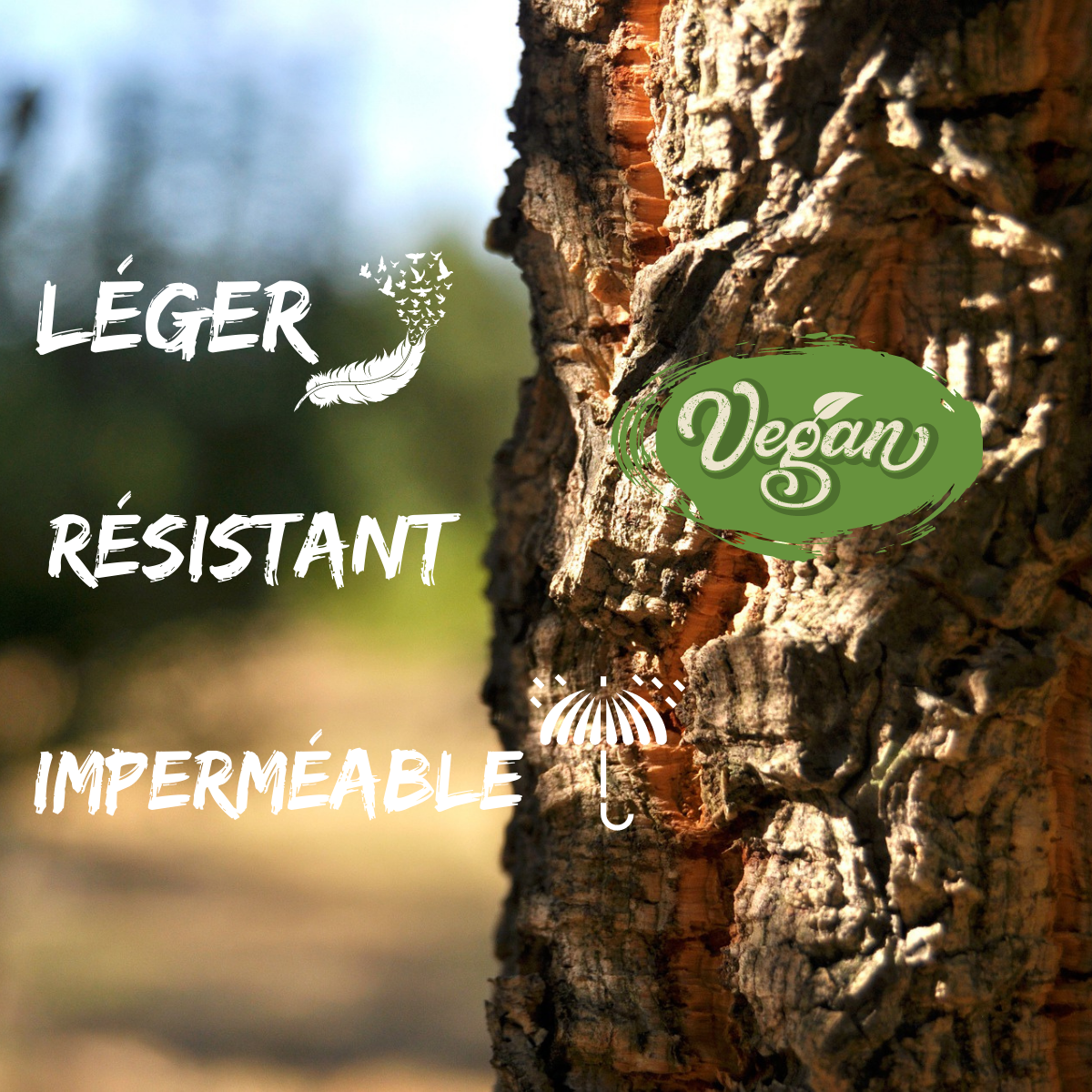
Once selected, the cork undergoes a final transformation to become what you know as cork leather or vegan leather: a flexible sheet, soft to the touch, resistant, and waterproof.
The cork planks are sliced into very thin sheets — about a millimeter thick — then glued onto a natural textile backing to give them hold and resistance. This technique allows for a material that is both flexible like fabric and resistant like leather.
The final result has remarkable properties:
- Waterproof thanks to the suberin naturally present in cork cells
- Ultra-light — two to three times lighter than animal leather of the same thickness
- Soft to the touch — its velvety texture is often the first thing that surprises our customers
- Abrasion-resistant — Oak Forest cork bags are designed to last for years
- Unique — each piece of cork has its own natural veins and patterns, meaning no two bags are absolutely identical
The work of Portuguese artisans
Once the cork leather is ready, it reaches the hands of our leather goods artisans in Portugal. These artisans perpetuate a savoir-faire passed down from generation to generation in the Porto and Alentejo regions — two areas historically linked to cork cultivation and processing.
Every Oak Forest bag, every pair of shoes, every piece of jewelry is handmade in small batches. The pieces are cut, assembled, and finished manually, which means that each item is slightly unique — the natural veins of the cork vary, the shades differ slightly from one plank to another.
It is this artisanal dimension that justifies our choice to produce in Portugal rather than mass-produce in an Asian factory. We prefer quality European production, respectful of artisans and the material.
Why choose cork over animal or synthetic leather?
| Natural cork | Animal leather | Synthetic | |
|---|---|---|---|
| Vegan | ✅ | ❌ | ✅ |
| Biodegradable | ✅ | Partially | ❌ |
| Naturally waterproof | ✅ | ❌ | Variable |
| No tree felling | ✅ | ❌ | ✅ |
| Made in Europe | ✅ | Variable | Rarely |
| Lifespan | Long | Long | Short |
FAQ about cork production
How long does it take to make a cork bag? From harvesting the bark to delivery to your home, the entire process takes several months. The raw material alone requires 6 months of drying after harvest, even before production begins.
Is cork truly ecological? Yes, it is one of the most ecological materials available. Cork oak forests absorb between 5 and 10 times more CO₂ than an ordinary forest thanks to the bark regeneration process. Furthermore, no trees are cut down to produce cork.
Where does the cork in your products come from? Exclusively from Portugal, the world's leading cork producer. Our artisans work with local producers in compliance with sustainable certifications.
Is the cork certified? Portuguese cork is subject to strict standards for sustainable forest management. The Portuguese Cork Association (APCOR) oversees the entire sector to guarantee responsible practices.
Discover our creations in natural Portuguese cork
Now that you know the story of this extraordinary material, discover how our artisans have transformed it into unique fashion accessories:
Free shipping from €20 — Shipped within 24 hours — 15-day money-back guarantee

Leave a comment
This site is protected by hCaptcha and the hCaptcha Privacy Policy and Terms of Service apply.