Cork: Science, Secrets, and Sustainable Leather Goods Manufacturing in 2026
Cork: From the Forest to High-End Leather Goods. A Scientific Analysis of a Material of the Future.
Cork is no longer just an alternative to animal leather; it's a feat of plant biology. At Oak Forest, after 7 years of expertise, we've synthesized the latest research to explain why this bark is revolutionizing the sustainable fashion industry.
1. The Biology of the Cork Oak: A Unique Carbon Sink
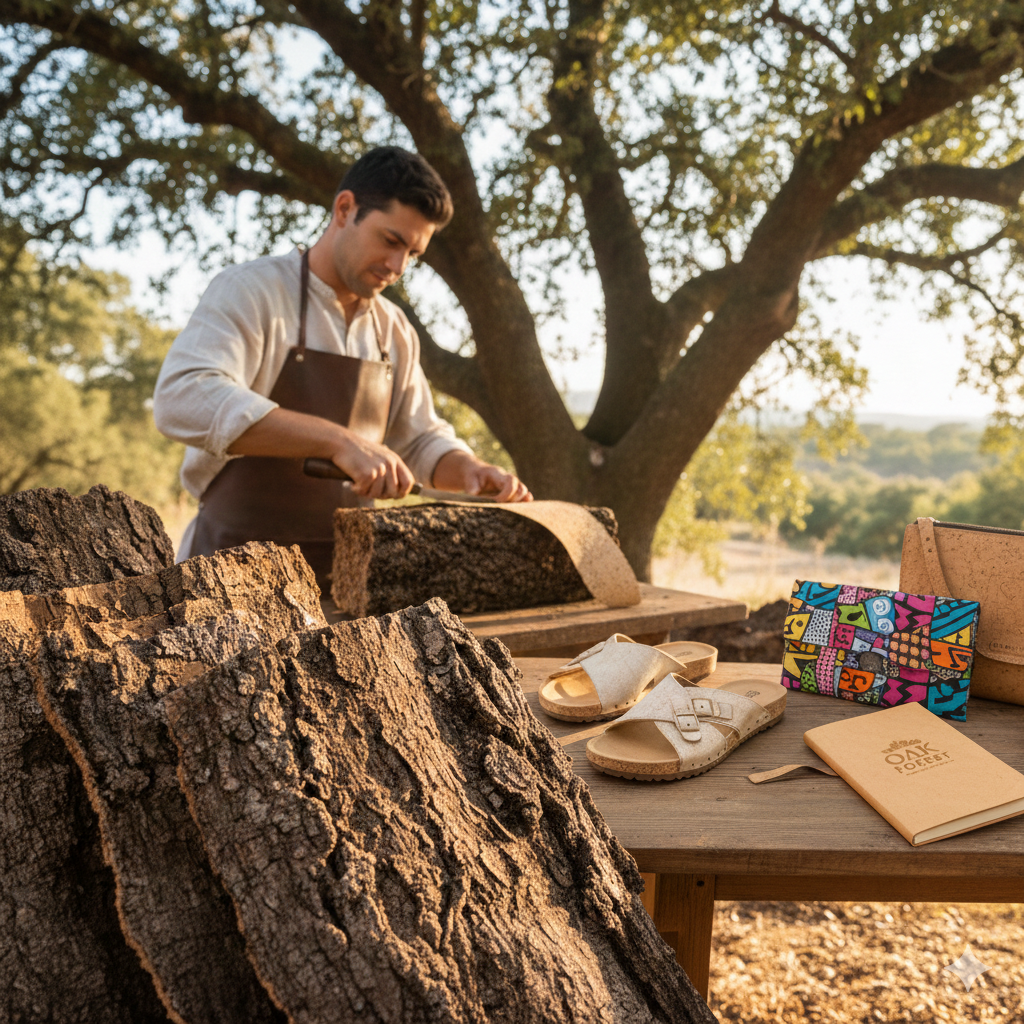
The cork oak (Quercus suber) is the only tree in the world whose bark can be harvested without causing its death.
-
The "Carbon Pump" Effect: According to studies conducted by APCORK (Portuguese Cork Association), a regularly harvested cork oak absorbs 3 to 5 times more CO2 than an unexploited tree. It is estimated that Portuguese cork forests (Montados) sequester up to 14 million tons of CO2 per year.
-
Suberin: The Secret to Durability: The cellular structure of cork is composed of 45% suberin. This natural macromolecule makes cork impermeable to liquids and gases, as well as resistant to fire and insects.
2. The Harvesting Process: A 9-Year Cycle
Harvesting (or "stripping") is a strictly regulated process in Portugal to ensure the health of the tree.
-
The first stripping (Desbóia): This takes place when the tree is about 25 years old. This "male" cork is too irregular for leather goods.
-
"Amadia" cork (Reproduction cork): It is only from the third stripping (i.e., after 43 years of the tree's life) that the cork reaches the density and flexibility required for Oak Forest bags and shoes.
-
Rhythm: A harvest every 9 years, allowing the bark to regenerate naturally.
3. Transformation: From Bark to "Cork Fabric"
To transform raw bark into a flexible wallet or shoe upper, the process remains physical and not chemical:
-
Drying and Stabilization: Cork planks are left in the open air for 6 months to stabilize their structure.
-
Boiling: They are immersed in boiling water (pure, without additives) to eliminate microorganisms and make the cork flexible.
-
Slicing: The cork is cut into extremely thin sheets (less than a millimeter).
-
Laminating: These sheets are fixed onto a backing (often cotton or recycled polyester) to give the "cork fabric" the necessary strength for sewing.
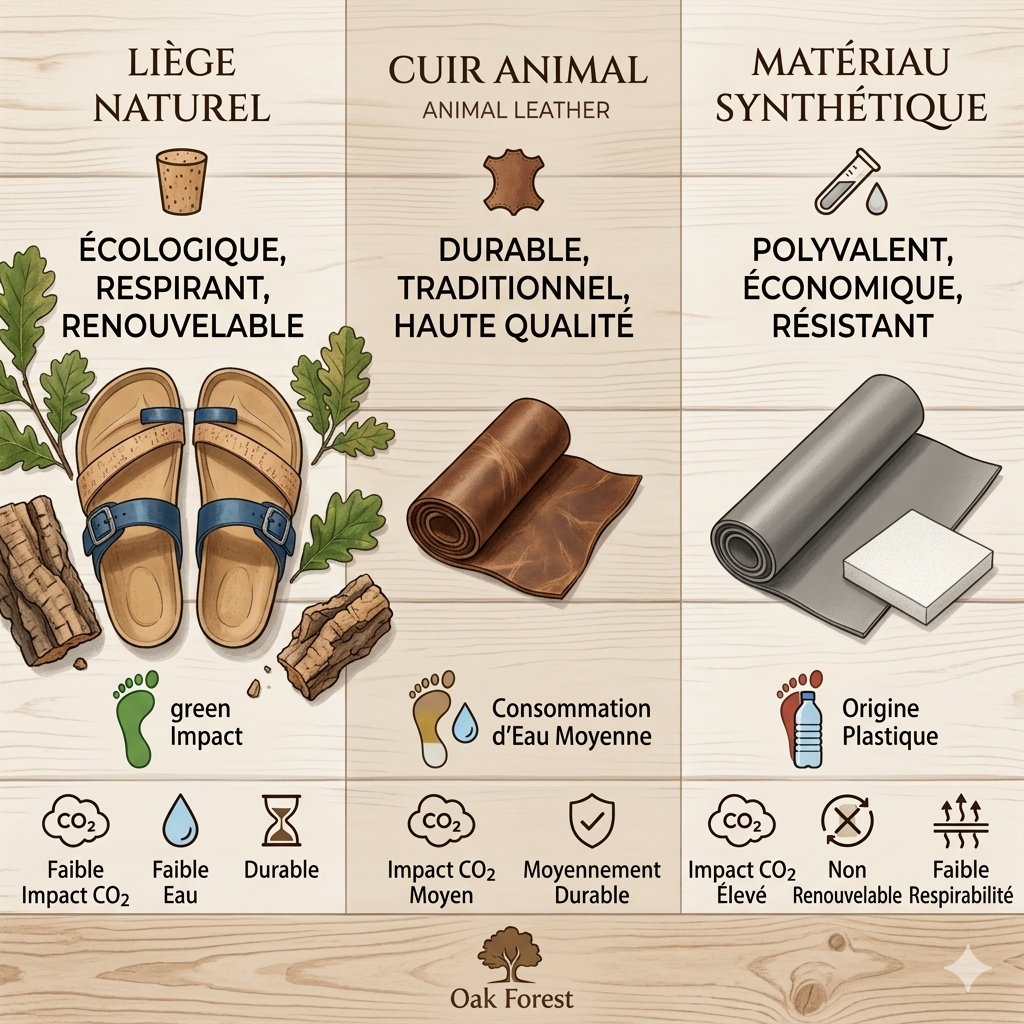
4. Comparative Analysis: Why Cork Surpasses Animal and Synthetic Leather?
5. The Leather Goods of Tomorrow: Oak Forest Expertise
For 7 years, we have observed a major evolution: the miniaturization of cork cells now allows for "Pop" finishes or smooth textures that rival the most luxurious leathers. Our sandals and bags benefit from this natural shape memory, a cellular characteristic that allows the product to adapt to its owner's use without ever permanently deforming.
6. In Conclusion: Wearing change, one accessory at a time
Science is clear: cork is not just a passing trend; it is one of nature's most advanced answers to the challenges of sustainable fashion. By combining a negative carbon footprint, unique physical properties of lightness, and innate impermeability, this Portuguese bark redefines the standards of luxury leather goods.
At Oak Forest, our mission for 7 years has been to take this material out of the simple craft framework and bring it into your daily life, with elegance and robustness. Whether it's through our anatomical sandals that mold to the shape of your feet, our handbags that weigh only a few grams, or our designer stationery, every piece we create is living proof that we can consume better without sacrificing pleasure.
Choosing an Oak Forest creation means investing in a product that will not crumble with time, but will develop a patina with your story. It also means actively participating in the preservation of cork oak forests, these essential ecological bulwarks for our future.
Ready to go vegan? [👉 Discover our latest collections of Portuguese cork leather goods and shoes]
Sources and Scientific References:
-
Instituto de Conservação da Natureza e das Florestas (ICNF), Portugal.
-
Study on the Sustainability of Montados, University of Évora (2023).
-
Life Cycle Assessment (LCA) of Cork, Corticeira Amorim (2024).
-
Physicochemical Properties of Suberin, Journal of Agricultural and Food Chemistry.

Leave a comment
This site is protected by hCaptcha and the hCaptcha Privacy Policy and Terms of Service apply.